He Was Franchising Coworking Space Before Coworking Was Cool
About 16 years ago, Mark Hemmeter decided to take a gamble on a new business venture – franchising co-working and shared office space. Back then, an upstart like WeWork didn't exist.
But Hemmeter figured there might be interest after he tried to work from home with family members hovering around and found it too distracting.
"None of us like it," he said.
Hemmeter moved out of his home office and into shared space. He liked it so much, he launched his own.
He was no stranger to risk. After all, he and his family had been in the casino business. In the early 1990s, they built Bullwhackers Casino in Black Hawk, Colorado, and made a run at other deals.
His Boulder, Colorado-based business grew slowly. But then came WeWork and others like it grabbing headlines. Their tailwinds have lifted his business, which has more than doubled the number of locations around the U.S. over the past year and a half.
“When we first started, no one knew what coworking was,” and it was a challenge to explain it, Hemmeter said. “Now it’s part of a normal part of the conversation.”
Office Evolution has 64 locations around the U.S. with 23 others under development. Hemmeter said he anticipates reaching 80 locations by the end of the year.
His focus is decidedly different than other better-known providers. For starters, Office Evolution tends to operate out of smaller space, offering a mix of open desks and private offices in about 7,000 to 10,000 square feet. WeWork, for example, will lease tens of thousands of square feet at a time.
The typical investment in the franchise is $350,000 to $550,000. While WeWork and its ilk might target urban areas, Office Evolution seeks locations in the suburbs. It’s most recent new location is in Herndon, Virginia, a Northern Virginia suburb of Washington, D.C.
Office Evolution's target customer is also different than with the other co-working spaces.
“My target market isn’t myself,” said Andy Bean, a 29-year-old millennial franchisee who opened a location in Alpharetta last year along with one in Dunwoody, both northern suburbs of Atlanta.
Membership consists mostly of professionals 40 years old and older, those who fall into the “solopreneur” category. Standing in his Alpharetta space, Bean said his members are typically attorneys, accountants and financial advisors.
“A lot of what we do is have people working out of Office Evolution to save their marriages,” Hemmeter half-jokingly said. These professionals “want a place where people actually work.”
Unlike other coworking spaces, there’s no cold-pressed coffee, beer on tap, ping pong tables or foosball. Office Evolution locations don’t have regular social events, either. Bean and Hemmeter said most of the professionals don’t have the time. They have to drop off the kids at sports or piano lessons and perhaps run home to cook dinner or head off to a dance recital.
Hemmeter said these are people who typically aren’t doing software coding. “They are meeting people,” he said. “It’s a fairly ignored market which is why we love it.”
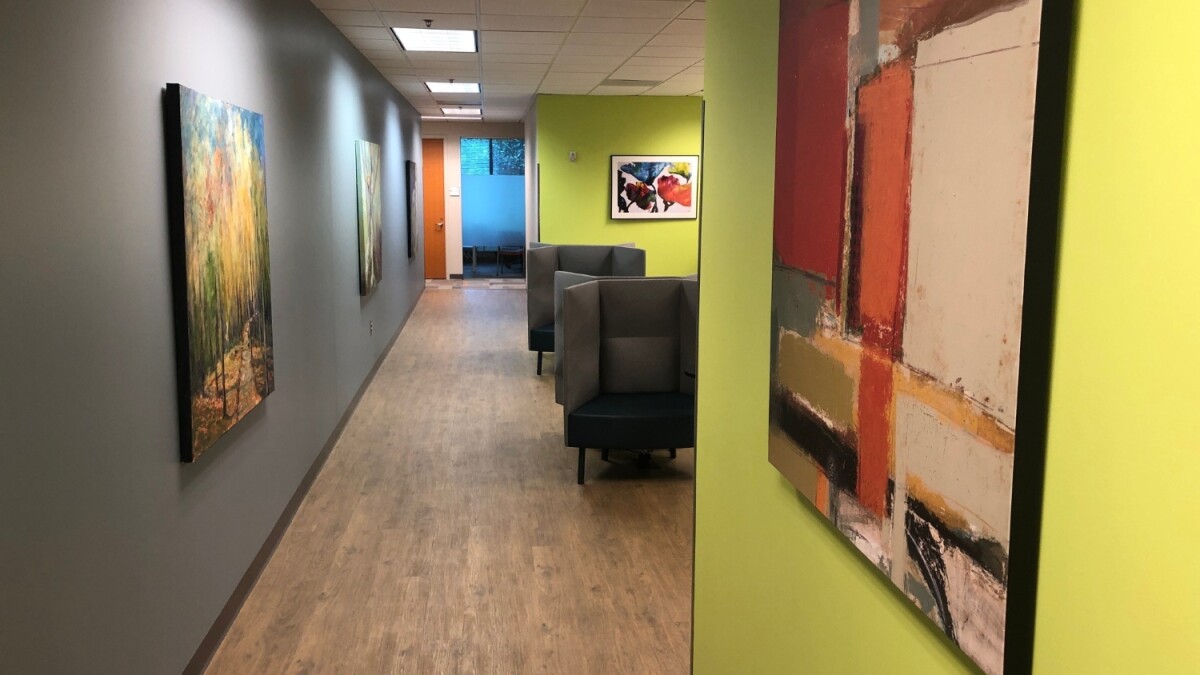
Though Office Evolution doesn’t have design features such as exposed beams and reclaimed wood, the interior design isn’t Spartan-like. The furniture may come from Herman Miller or Steelcase, two of the biggest commercial office furniture companies.
Bean said the Alpharetta location has 29 members so far and the private offices are about 85% leased. Retailer Bath & Body Works recently moved an office into his space. Dunwoody is building up as well, he said.
He quit his job a year and a half ago to open those locations with help from three investors. The franchise has a semi-absentee business model, Bean said.
“Corporate helps out a lot” with promotion, and many leads come from online sources, he said, so he doesn’t need to spend a lot of time networking to attract members and office users,
Bean didn't close financial details but said they are at about at the break-even point. With a staff in place, they are humming along to the point that he doesn't need to be watching over them day-to-day and now can jump off the payroll to work elsewhere.
An earlier version incorrectly identified franchisee Andy Bean. This post has been updated.
