No Zamboni Needed, It's a Glice Rink
Adding an ice skating rink to a retail center certainly would give the retailers that experiential draw they all crave to keep shoppers happy and coming back.
But they are expensive to build and maintain. The return on investment may not be there.
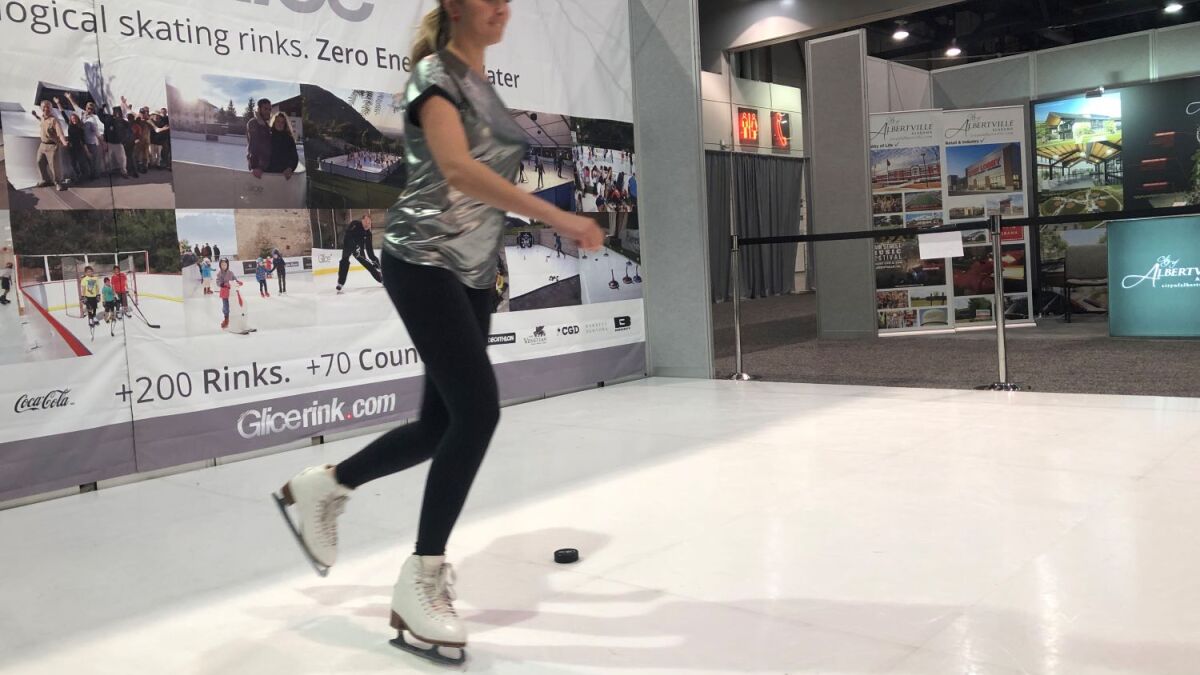
What if you didn’t need ice to have ice skating? That may sound crazy but a Swiss company named Glice sells a product that lays out in panels and you can skate on it like ice. It's difficult to believe until you see a skater spin around on it in a booth at the International Council of Shopping Centers' ReCon convention in Las Vegas.
The panels are a polymer that self-lubricates to give a slickness that mimics ice. “We’re the only one in the world who makes this product,” said Mark Winter, chief executive officer of Glice USA, based in Niwot, Colorado.
There’s no water, no refrigeration and no Zamboni, which means money savings. Winter said a shopping mall in Anchorage, Alaska, was told it would cost $4.3 million to replace a rink. Glice bid about $800,000. The maintenance over the long-term is about 15% of the standard ice rink, he said.
“That’s where you really save millions of dollars,” Winter said.
Glice rents out rinks, which means pop-up potential, but also sells the panels.
The “ice” is about 70 percent close to real ice, Valeriya Sergeeva, a Las Vegas model from Moscow and former professional skater, said after doing a few pirouettes to help showcase the product. But Sergeeva said the average person won’t be able to tell the difference.
She said that you can play hockey on the surface. You just need to take more time to stop.
According to Winter, it's an all-weather product, too. He said Glice stands up to 110 degree heat, noting that the product is in rinks in Dubai.
There are about 1,000 of these rinks worldwide with 26-27 in the U.S., he said. The largest one is at the Ark Encounter in Grant County, Kentucky.
Winter said these rinks help “create new forms of activations and engagement with local communities” as well as improve the foot traffic for shopping centers.
